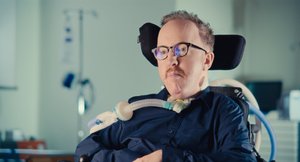
Episode 5.3: Less ‘Whoa!’ More ‘Let’s Go’: Zeen for People Committed to Maintaining Mobility. A conversation with Rick Sherak
In this episode, Rick Sherak breaks down the safety and support features behind Zeen, a mobility device designed for people who are committed to maintaining or regaining their ability. We talk about how Zeen helps reduce common risks like tripping, stumbles, and fatigue—and why many first-time users are genuinely surprised by how supportive it feels, including its ability to help someone move from seated to fully supported standing using what Exokinetics calls “Bar Stool Mode.”
What You’ll Learn
The inventor of the Zeen Garrett Brown, and his other renowned invention
What the Zeen is and what it is designed to do
Why many users are shocked (in a good way) by how stable and supportive it feels
How “Bar Stool Mode” helps users go from seated to fully supported standing
Who Zeen tends to be a good fit for (and who it may not be for)
Topics We Cover
Stability and support: what “safe walking” actually means day-to-day
Confidence-building: support that encourages movement (not avoidance)
Transitions matter: standing up safely, stopping to rest, and getting moving again
“Bar Stool Mode” explained: a supported seated position and assisted rise to standing
Fatigue management and pacing strategies
Standout Moments / Quotable Lines
"I tell you Hollis, and I just always have to say this, the Zeen, though it is a transformative device for many many people, it's not for everybody. It truly is for active minded people that want to either maintain, or in most cases regain, their mobility. It's all in the mind."
"You say to them, it has you, it has you. Trust it. And as soon as you see that trust clicking in their minds, it's amazing how the individual has confidence in the device and they can step out and use their body in ways that they haven't in a long time, if ever in some cases."
"We often call it 'Barstool Mode' you are sitting up high and you are a part of the conversation."
Who This Episode Is For
People working to maintain mobility and keep walking part of daily life
People who struggle most with sit-to-stand transitions
Care partners seeking safer ways to support independence
Clinicians/therapists evaluating real-world mobility tools that still encourage activity
Friendly Reminder: This episode is for general education and isn’t medical advice. Talk with a qualified clinician about what’s appropriate for your needs and environment.